📄 Digital book in PDF · read it on your phone or print it
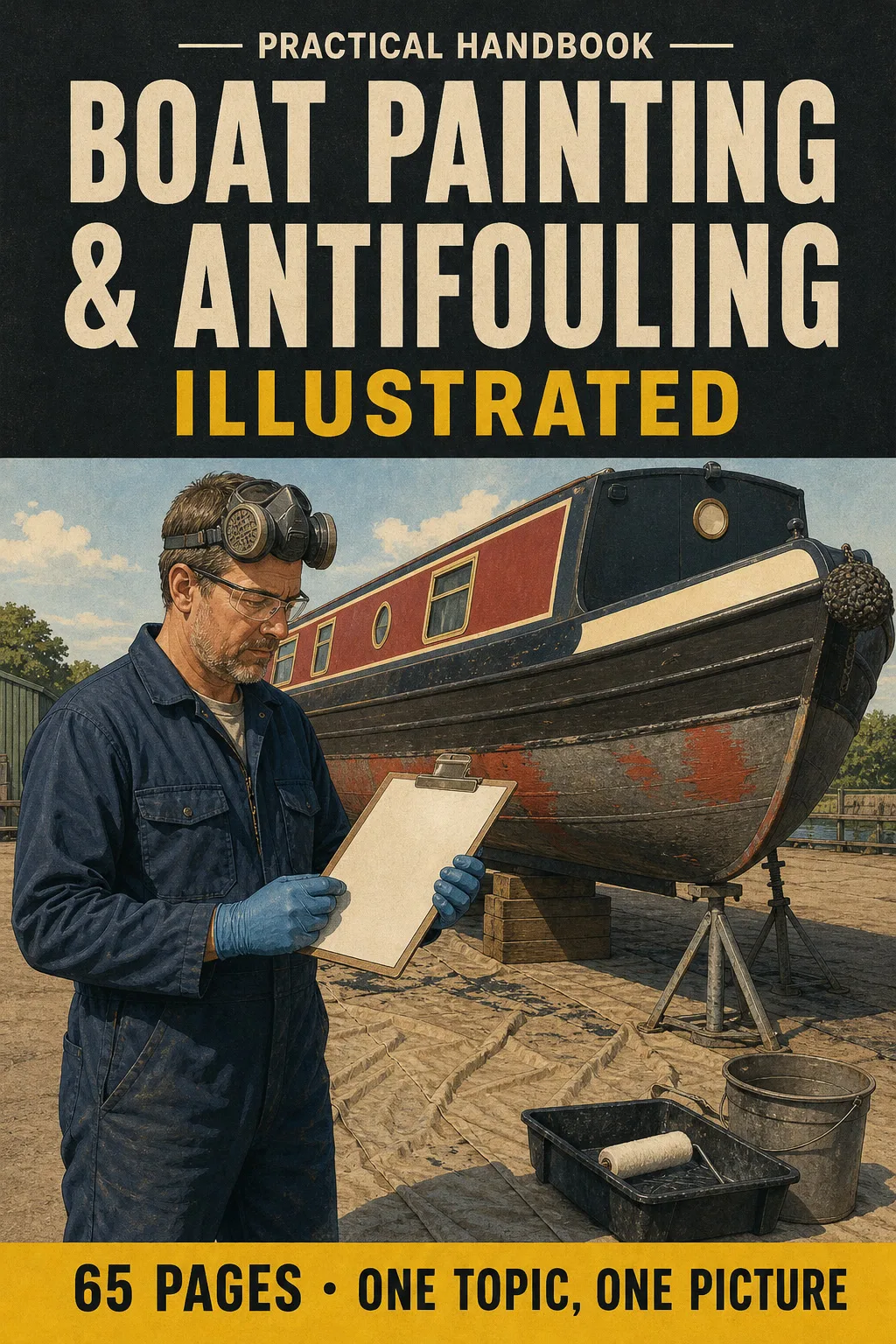
Hull preparation, reading the tin, recoat windows, primers and tie coats, a straight waterline, antifouling, narrowboat blacking and the boatyard clean-up. Every topic has its own page: the drawing first, then what you need to remember. 65 illustrated pages.
🔒 Secure checkout · PDF by email · 30-day guarantee
Every page has a large drawing and a box with the steps, times and rules you need to know:


Swipe to see more →
These are real pages from the book. The table of contents is the full one: 8 parts and 61 topics.
You're standing next to the hull with the data sheet in one hand and the chandlery order in the other, and you have to decide how many tins to buy before the weekend.
The data sheet gives a spread rate in square metres per litre. The forum gives a rule of thumb, and the man on the next boat gives another. Everything is explained in paragraphs, and nobody shows you how to get from your hull to a number of tins.

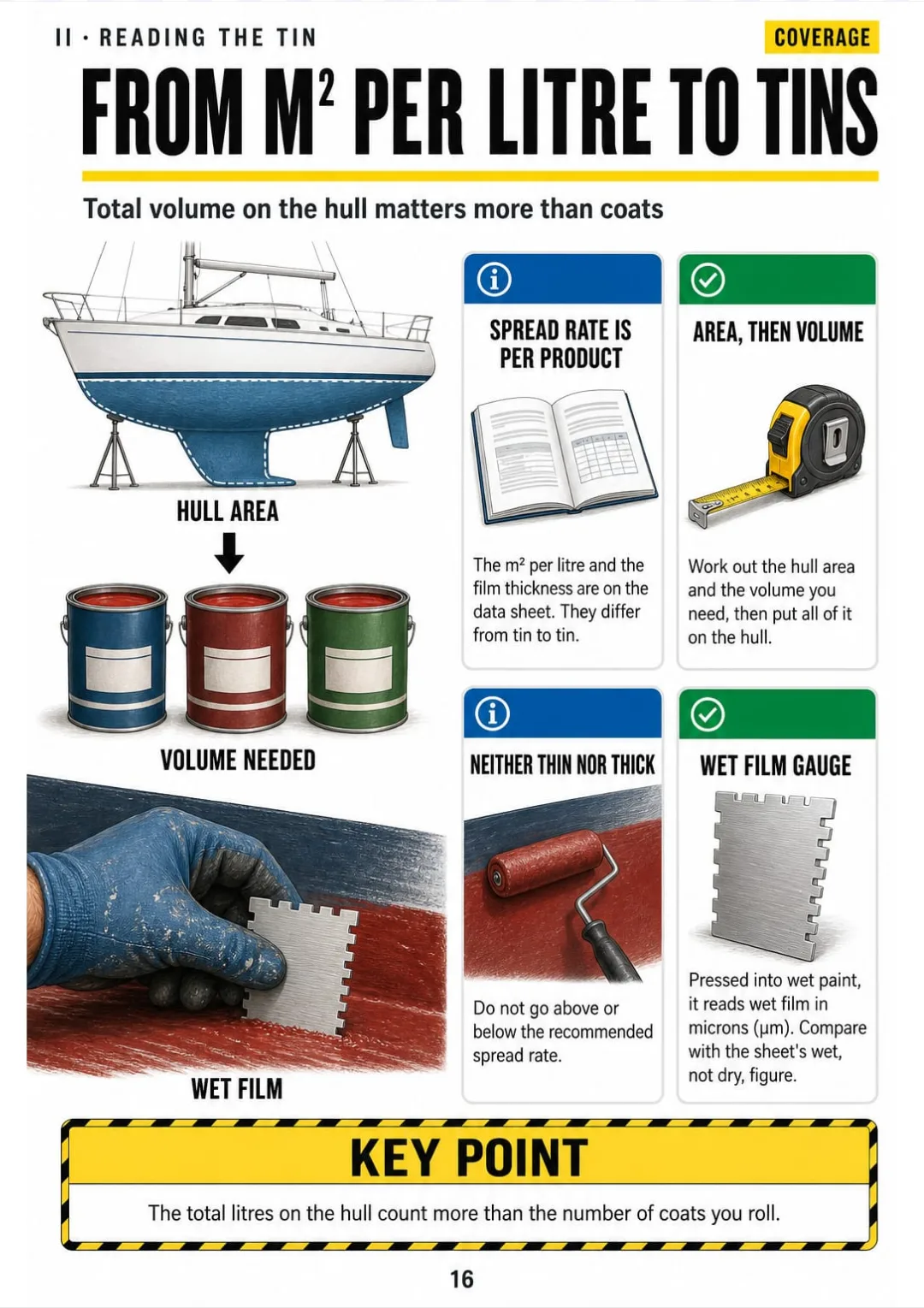
In the book it's one page: your hull area, divided by the spread rate on the data sheet, times the number of coats, then rounded up to whole tins. You see the sum drawn, with a worked example beside it.
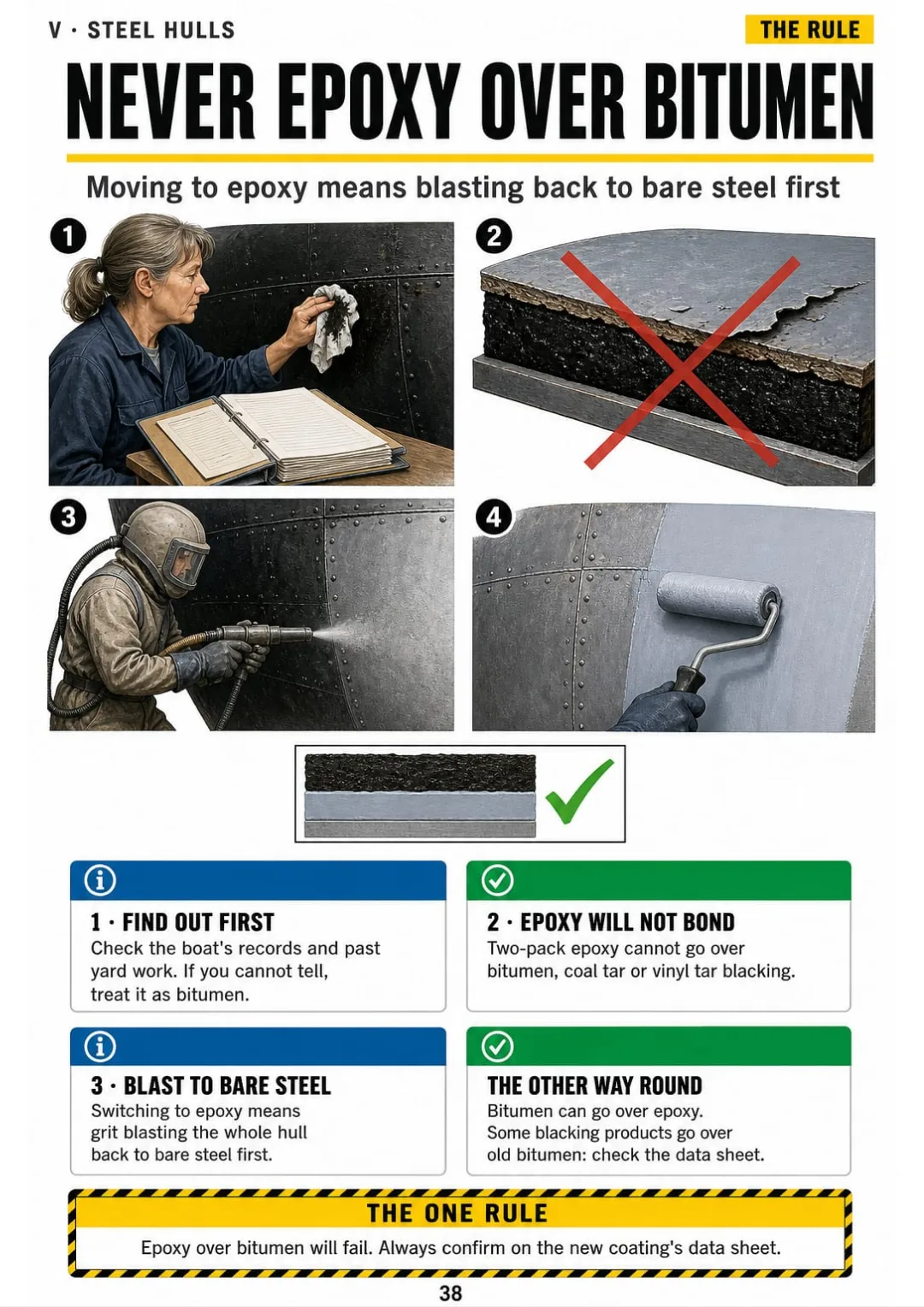
The recoat window, the dew point, the tie coat, a straight waterline and the rule of never putting epoxy over bitumen: each one has its own page, drawn the same way.
You work out your litres, order the right tins and get on with the job. No going back to the forum, no running out of paint on day four.

The whole job at a glance, reading the tin, safety and the boatyard, GRP hulls, steel hulls and narrowboats, primers and the waterline, antifouling and blacking, and launch and common mistakes: 65 pages, all illustrated.
Think of it this way:
It's day three of your dry dock slot, the first coat is on and the sky is turning grey. You need to know whether the second coat can go on tonight or has to wait until morning.
You open the recoat window page and there's a timeline drawn: touch dry, hard dry, then the minimum and maximum before the next coat, with the temperature that moves them. You hold your tin up to it and decide.

The same goes for the dew point, the tie coat, a straight waterline, the anodes and the pad positions: each one on its own page.
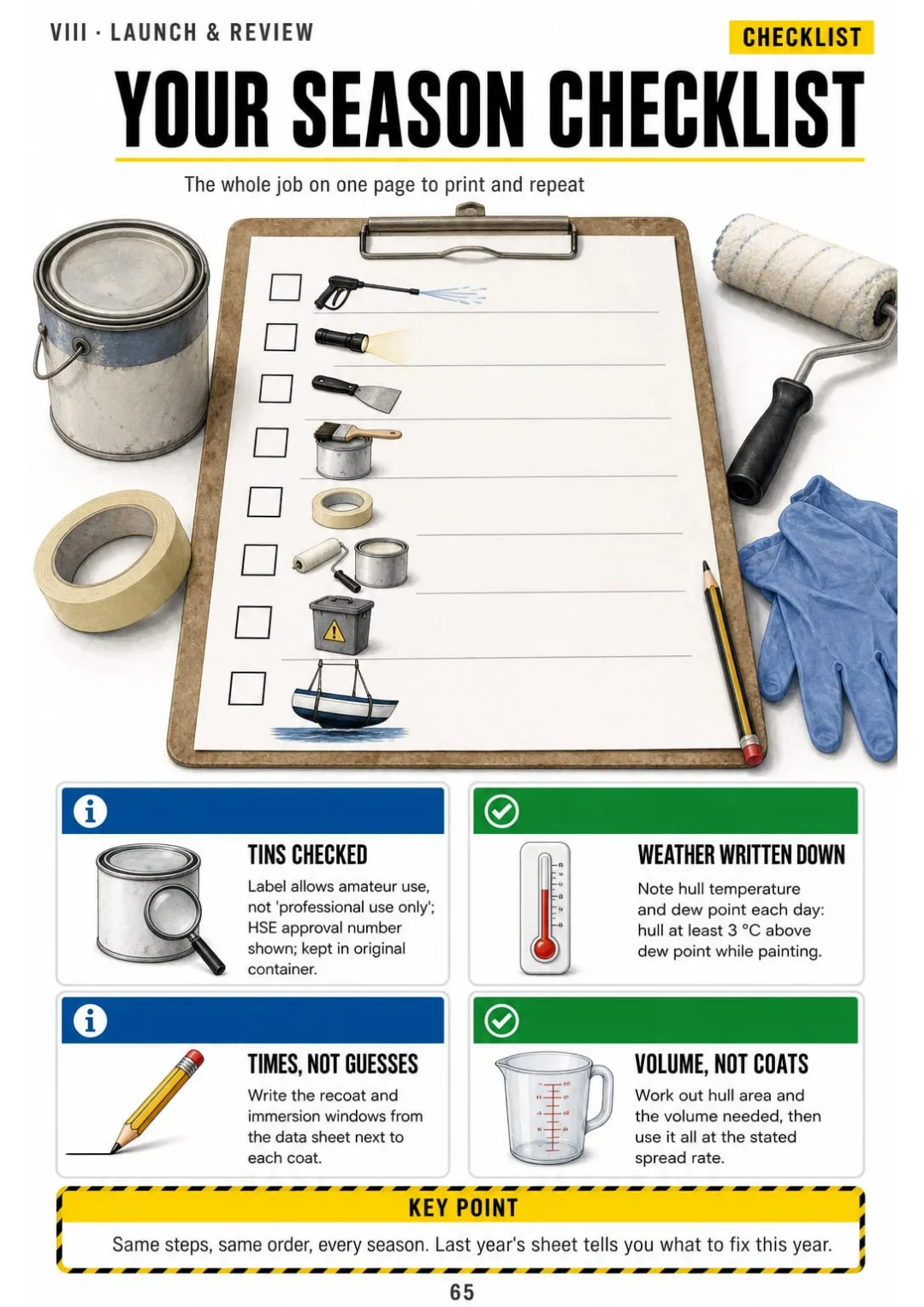
Boat Painting & Antifouling Illustrated is 65 illustrated pages in 8 parts, every topic drawn on its own page, and at the end there's your season checklist with boxes for dates, weather and coats.
What you see drawn, you don't have to memorize.
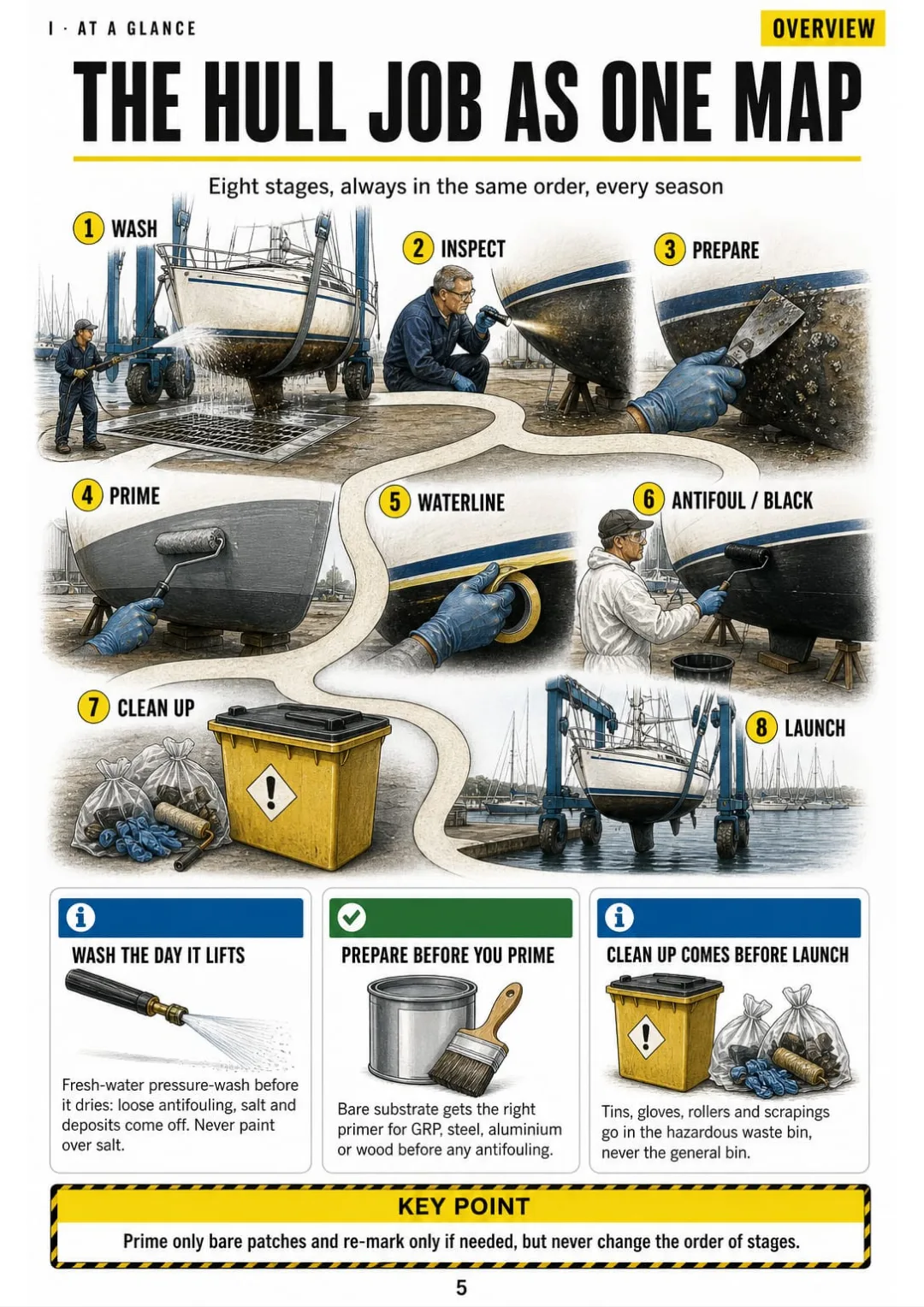
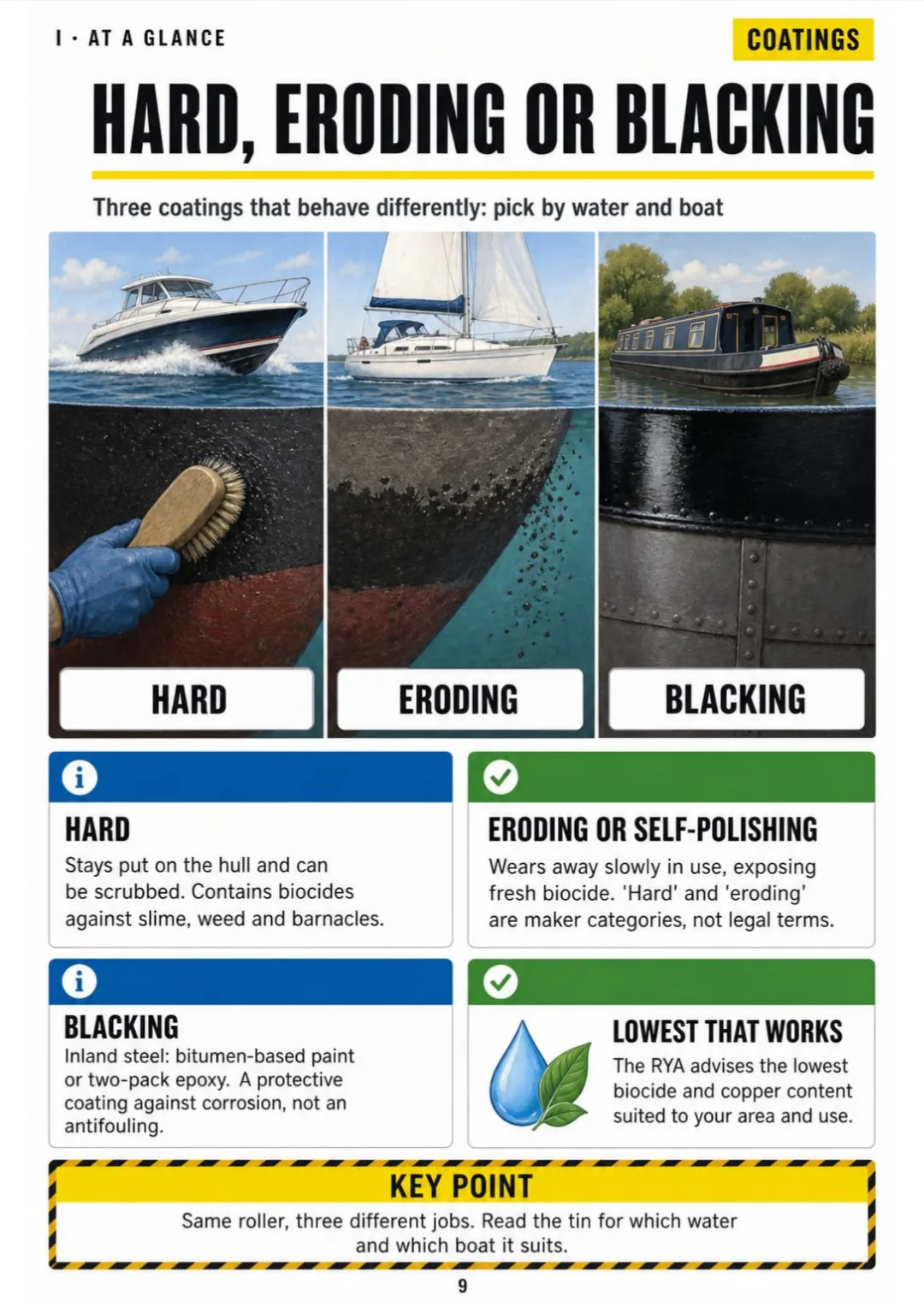
Before the boat comes out, you see the whole job as one map: which pages are for your boat, the layers in cross-section, what's already on your hull (hard, eroding or blacking) and how many days to book out of the water.
The parts of a paint label, touch dry and hard dry, the recoat window, temperature, humidity and dew point, the launch window, coverage, amateur or professional use, and new paint over old.
Your kit, antifouling dust, working under a boat on stands, the work zone from above, pressure-wash water, solvents and rags, and where empty tins go.
Washing and scraping, blisters and osmosis, dewaxing a new hull, sanding grits, overcoating or stripping, small chips and dents, and when an epoxy barrier coat makes sense.
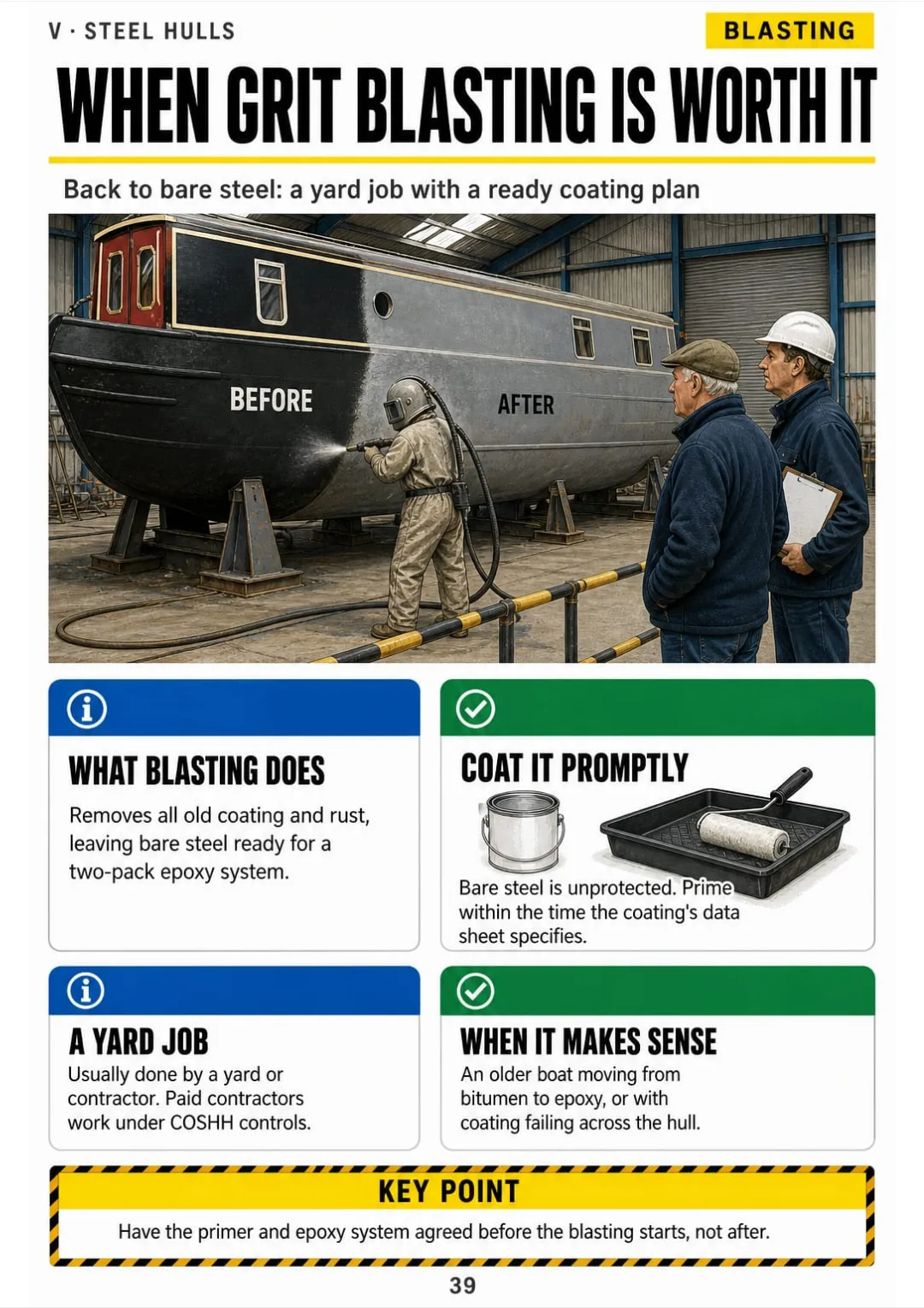
The narrowboat hull part by part, the first hours in dry dock, rust and pitting, bitumen or two-pack epoxy, never epoxy over bitumen, grit blasting and anodes.
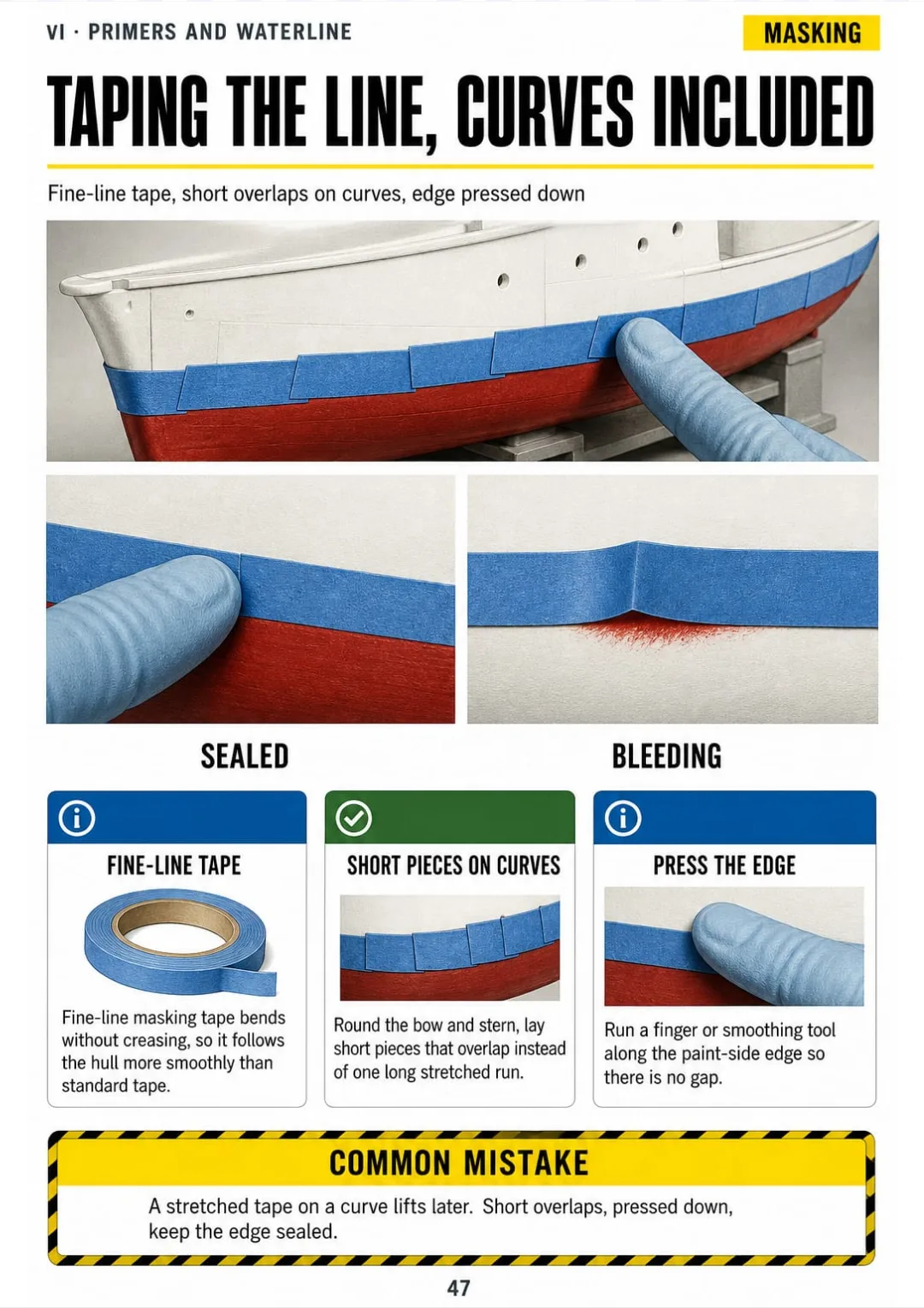
What a primer does, mixing two-pack, pot life, building the coats, the tie coat, marking and taping a straight waterline, and the boot top.
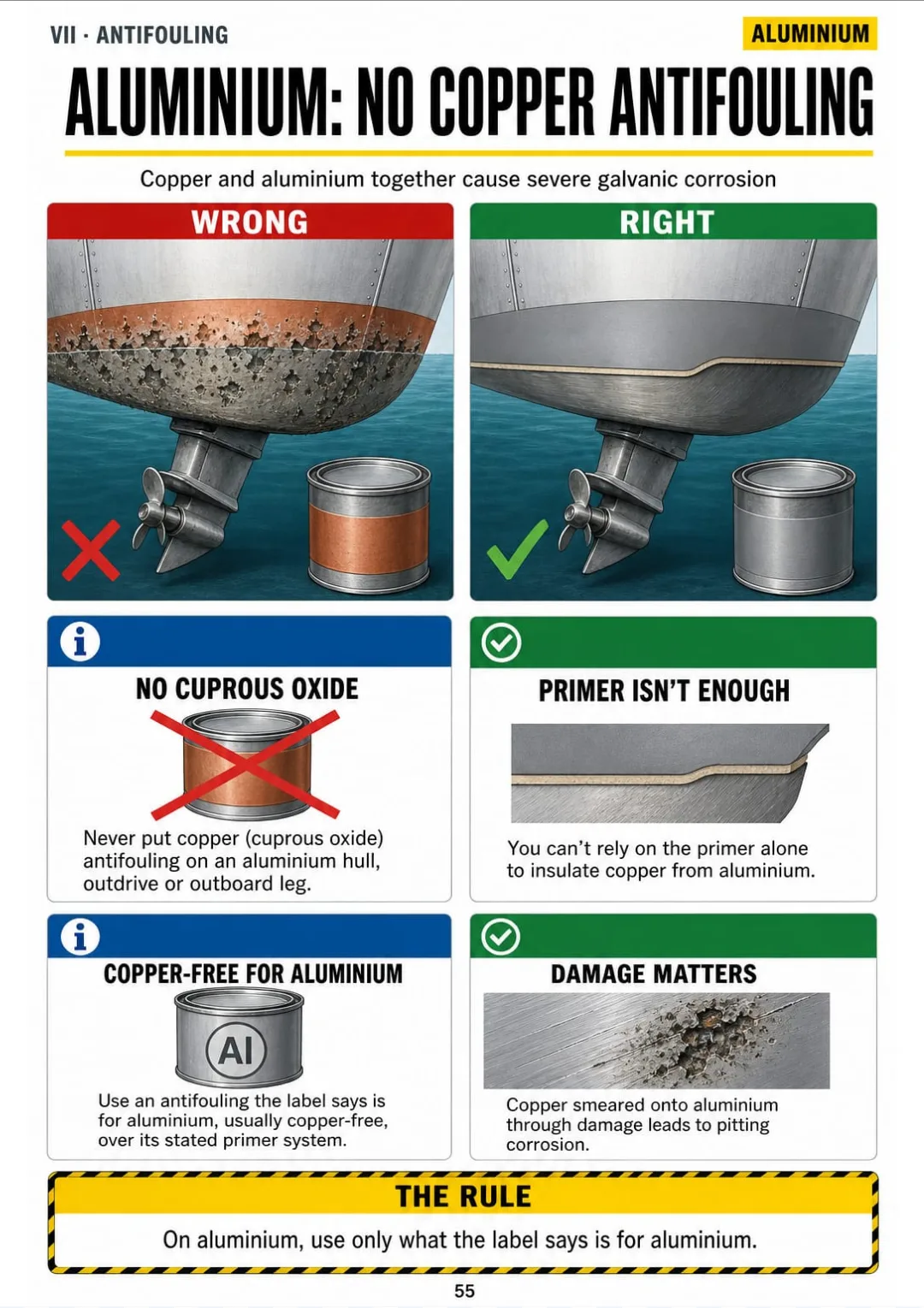
Loading the roller, rolling without runs, extra coats where the water works hardest, keel and pad positions, stern gear, through-hulls, aluminium, and blacking a narrowboat coat by coat.
Clean-up, the walk-round before launch, the first weeks afloat, the mid-season check, runs, flaking, a crooked waterline, and your season checklist.
At the end of the book: A season checklist with eight steps in order and boxes for dates, weather and coats.
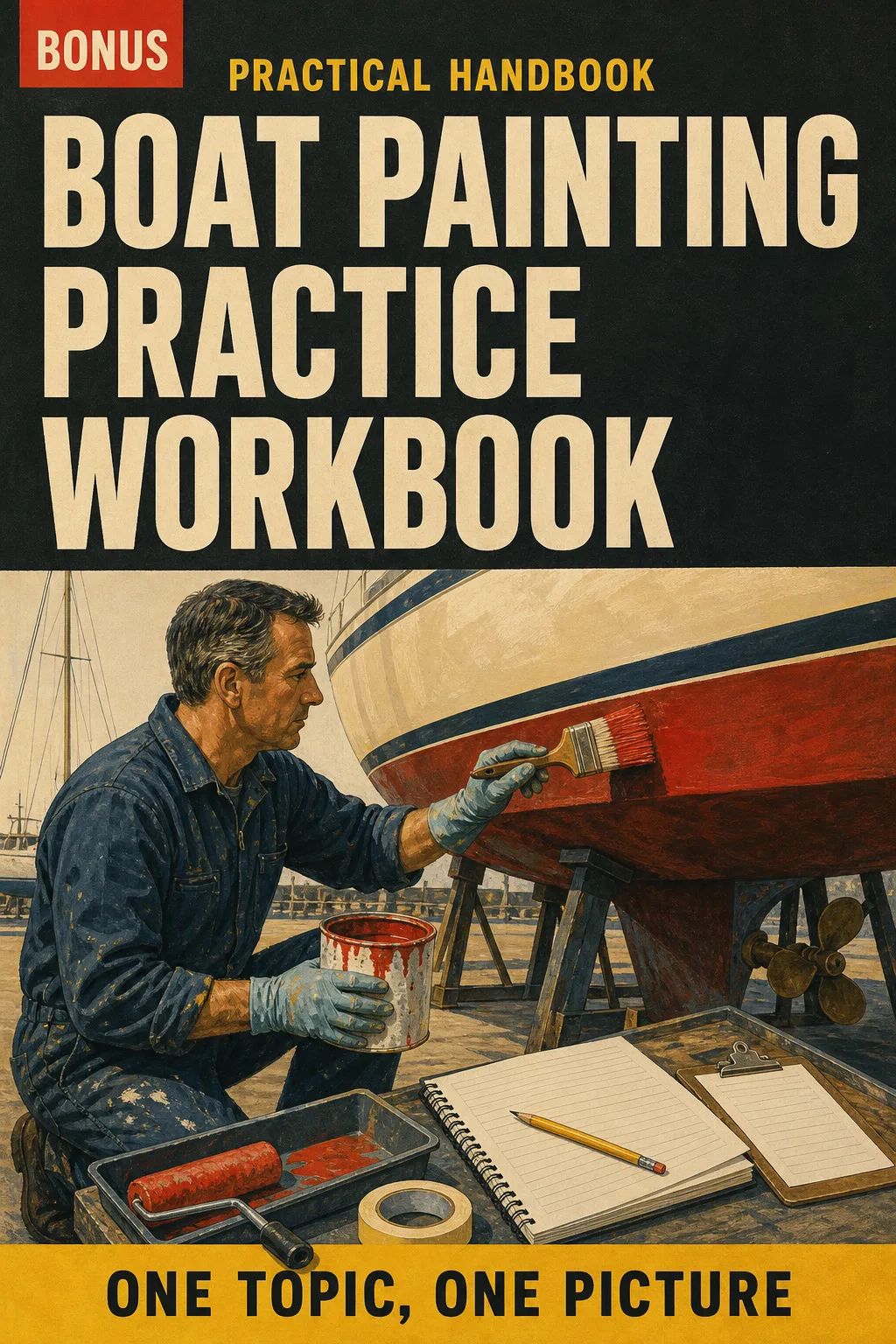
Work through label, recoat-window and hull-area exercises before you open a tin, with every answer drawn out.

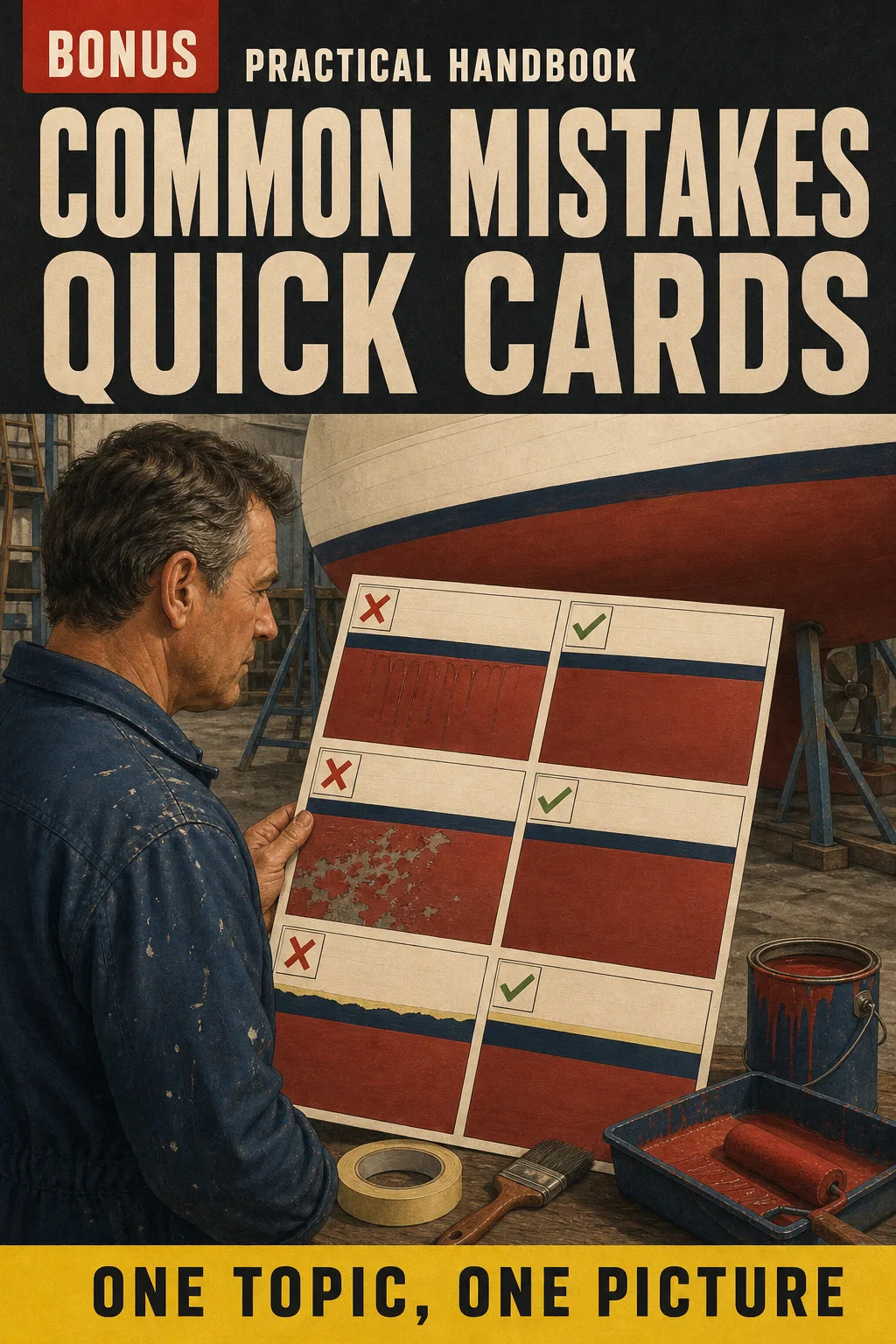
The most frequent errors, from runs to flaking antifouling, each on one card with a before/after drawing to check at the boatyard.
📄 This is a digital PDF book sent to your email: nothing is printed or shipped.
PDF by email: We email you Boat Painting & Antifouling Illustrated as a PDF, together with the two free books. It's a single payment: no installments, no extra charges.
You see the whole job as one map before the boat comes out, so you know which pages are for your hull and how many days to book.
You know what goes on first, how to read the recoat window on the tin and what to do when rain is forecast halfway through the week.
You have it all in one printable place: the layers, the waterline, the anodes and a checklist to repeat every season.
📄 This is a digital PDF book sent to your email: nothing is printed or shipped.
Try Boat Painting & Antifouling Illustrated for 30 days, bonus books included.
We refund everything if the file won't open, if the book isn't what you see here, if you were charged twice or if the email doesn't arrive. Just email us.
You pay once. No subscriptions.
Yes. GRP hulls and steel hulls and narrowboats have their own parts, so you go straight to the pages for your boat. The rest (the tin, safety, the waterline, antifouling) works for both.
From the manufacturer's label and safety data sheet for each type of product, HSE guidance on antifouling paints and Environment Agency guidance on pollution at boatyards. No paint brands are recommended: the book always sends you back to your tin's label.
No. It's an independent illustrated guide. It isn't affiliated with, approved or endorsed by any public body, association or paint manufacturer.
No. The label and data sheet of your product and your boatyard's rules always come first. The book helps you understand them and do the job in the right order.
It starts with the whole job as one map and builds page by page, so a first-timer can follow it. If you've done your hull for years, it's your printable reference: the layers, recoat windows, the waterline and a season checklist. The workbook exercises are written for this book.
As a PDF by email, to the address you enter at checkout. The 2 bonus books come the same way.
No. It's a one-off payment, with no subscription.
Yes. It's a PDF you can print at home or at a print shop and take to the boatyard.
You have 30 days. We refund everything if the file won't open, if the book isn't what you see on this page, if you were charged twice or if the email doesn't arrive: just email us.
No more rereading forum threads that say ten different things.
The layers, the recoat window and the waterline: you see them drawn, and that's it.
You get to the boatyard knowing where everything is.
Drawings make studying faster.
The book is right below.
One-time payment: US$ 27 · Guarantee: 30 days · PDF by email
YES, I WANT BOAT PAINTING & ANTIFOULING ILLUSTRATED FOR US$ 27📄 This is a digital PDF book sent to your email: nothing is printed or shipped.